
close
Choose Your Site
Global
Social Media


Views: 0 Author: Site Editor Publish Time: 2026-11-05 Origin: Site


Extracting maximum value from modern gold deposits is no longer a simple task. Mines are pushing deeper into complex, low-grade, and refractory ore bodies. Walk into any processing plant today, and you will quickly realize that efficiency is dictated by chemistry. Pick the wrong collector, and your recovery drops while downstream costs spike. That is why plant managers are switching to specialized collectors. They need to bridge the gap between theoretical lab recovery and actual plant output.
This guide explores the strategic deployment of ammonium dibutyl dithiophosphate. By mastering its chemical behavior, you can fine-tune your flotation circuits for maximum precious metal yield.
The mining sector is currently facing a dual challenge. Average head grades are steadily declining globally. Simultaneously, environmental regulations regarding tailings management and smelter emissions are tightening. This macro trend forces processing plants to abandon brute-force bulk flotation. Instead, the industry is pivoting toward high-precision metallurgy. Smelters now impose severe penalties for iron and arsenic contaminants. Therefore, adopting highly selective reagents is no longer just a technical upgrade. It is a critical commercial necessity for maintaining profitability in low-margin operations.
To optimize plant performance, we must look at the fundamental chemistry. This specialized organophosphorus compound belongs to the dithiophosphate family. Physically, it presents as a white to light grey crystalline powder. It features a remarkably high water solubility. You can integrate it seamlessly into existing dosing systems without requiring high-shear agitation.
From an engineering standpoint, chemical quality dictates plant stability. Premium variants typically boast an active ingredient concentration exceeding 95 percent, with moisture kept strictly under one percent. When you dose this chemical into a flotation cell, it selectively adsorbs onto targeted gold-bearing sulfide surfaces. It renders them hydrophobic. The precious metal particles then attach to rising air bubbles, forming a stable, mineral-rich froth. Meanwhile, hydrophilic waste rock safely remains in the pulp.
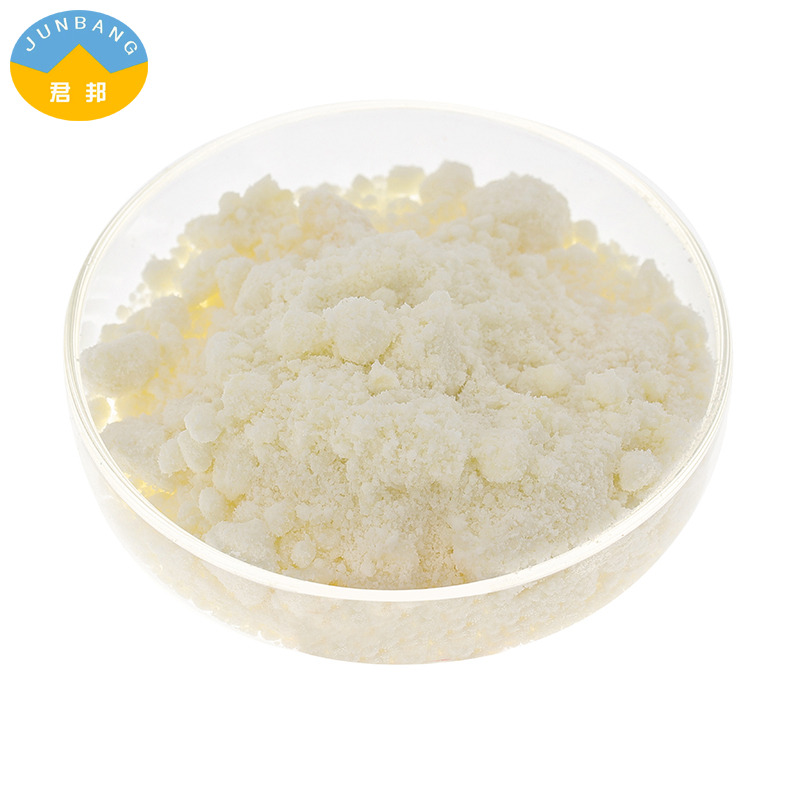
The interaction between the reagent and the ore relies on chemisorption. The molecule uses sulfur atoms to donate electron pairs to metal ions on the mineral surface. Thanks to the specific structural arrangement of the dibutyl carbon chains, it forms stable covalent bonds with gold, silver, and copper. Crucially, it ignores gangue minerals like silica and iron-based impurities.
Beyond primary collection, this reagent changes froth zone dynamics. It offers mild, inherent frothing characteristics that build a resilient froth layer. In large-scale industrial flotation cells, stability is everything. If bubbles collapse too early, valuable gold particles detach. Metallurgists call this drop-back. This collector prevents drop-back, ensuring precious minerals transport safely into the concentrate launder. Furthermore, it performs best in mildly alkaline environments, specifically a pH range of 8.0 to 10.0.
When do standard collectors fail? You need clear metallurgical justification to transition to a specialized chemical. Consider this upgrade under the following conditions.
Modern ore bodies often contain interlocked matrices of gold, silver, copper, and lead. These demand a delicate touch. You need a reagent that pulls precious metals while rejecting lead and zinc contaminants. The targeted affinity of the dibutyl functional group handles this differential flotation perfectly. It ensures your primary concentrate remains clean and highly marketable.
Excessive pyrite or pyrrhotite dilutes concentrate grade. Standard xanthates act like a sledgehammer, floating everything together. By adopting a precise collector, plants maintain high recovery while successfully rejecting iron sulfides. This directly eliminates heavy smelter penalties.
Ores sitting in long-term stockpiles develop oxidized surfaces. Conventional reagents struggle to float these tarnished particles. The extended alkyl chain of this specific dithiophosphate penetrates these oxidized layers. It restores hydrophobicity and captures gold that would otherwise end up in the tailings dam.
Plant managers must constantly evaluate how different chemical suites perform. Let us look at a direct comparison to help you maximize economic return.
| Reagent Type | Primary Strength | Selectivity | Best Application Scenario |
|---|---|---|---|
| Potassium Amyl Xanthate | High collecting power | Low | Bulk sulfide flotation, clean ores |
| Ammonium Dibutyl Dithiophosphate | Excellent gold/copper affinity | Very High | High-pyrite ores, complex polymetallic |
| Dithiophosphate 25 | Robust frothing characteristics | High | Lead-zinc circuits requiring froth stability |
Xanthates remain the industry standard for bulk flotation due to their sheer power. However, their lack of selectivity pushes excessive pyrite into the concentrate. Dithiophosphates are precision instruments. They prioritize grade over volume.
During your evaluation, you might test dithiophosphate 25. It utilizes aromatic rings to provide strong frothing, often favored in specific lead-zinc circuits. Alternatively, sodium diisobutyl dithiophosphate features a branched alkyl chain. This unique steric profile works wonders for certain copper-gold associations. There is no universal solution. Bench-scale testing is the only way to find your optimal plant configuration.
Shifting to a premium collector refines the economics of your entire circuit. The immediate benefit is a higher final concentrate grade. By minimizing barren gangue, you slash filtration, drying, and shipping costs.
Furthermore, this reagent exhibits rapid flotation kinetics. Gold particles attach to bubbles faster. You achieve target recovery in less time, creating a buffer for higher plant throughput. Because of its high potency, standard dosages typically range from 10 to 50 grams per ton. This is significantly lower than conventional alternatives, offsetting the unit cost and simplifying handling on site.
To translate these benefits to the plant floor, follow strict application discipline.
A successful reagent transition hinges on supply chain consistency. Impurities like unreacted alcohols cause uncontrolled frothing. Always demand a rigorous Certificate of Analysis for every batch you receive.
Every ore body has a unique mineralogical fingerprint. Generic chemicals fall short. Partner with a manufacturer equipped with deep metallurgical expertise. They should conduct bench-scale testing and help fine-tune your dosing based on daily head grade variations. Treating your supplier as a technical partner ensures your plant remains at the cutting edge of recovery efficiency.
Upgrading to specialized collectors is a proven method to maximize recovery from complex gold ores. By rejecting iron sulfides, you produce a cleaner, higher-value concentrate that protects your profit margins. Stop relying on outdated standard practices. Initiate a laboratory testing program today to compare variants. Visit Junbang Chemical to find the exact reagent specifications for your ore, and contact our technical experts to arrange a pilot trial to upgrade your flotation circuit today.
The most effective results happen in slightly alkaline conditions, specifically a pH range of 8.0 to 10.0. This environment naturally depresses iron sulfides like pyrite. It allows the collector to bond exclusively with your target gold and copper minerals.
Yes, in certain clean circuits. However, plants commonly use it as a primary collector alongside xanthates. The main collector secures high-grade targets, while a secondary xanthate dose in the scavenger circuit acts as a safety net for coarse particles.
The difference lies in the molecular structure. The sodium variant features a branched isobutyl chain. This alters its steric hindrance and solubility. Engineers often prefer this branched structure in specific copper-gold circuits where mineralogy demands a different selectivity profile.
Yes, if you follow strict storage guidelines. Keep the product in tightly sealed containers inside a cool, dry warehouse. Direct sunlight and moisture degrade the active chemical bonds, which drastically reduces metallurgical performance on the plant floor.
Dosage rates vary based on head grade and mineralogy, but they typically range from 10 to 50 grams per ton of ore. Because of its high potency, this is often much lower than bulk collector requirements, making it highly cost-effective.
Temperature plays a crucial role in chemical adsorption. While this collector performs well at ambient temperatures, extreme cold can slow down flotation kinetics. Maintaining a stable slurry temperature ensures consistent froth stability and rapid mineral attachment.

