
close
Choose Your Site
Global
Social Media


Views: 0 Author: Site Editor Publish Time: 2026-05-23 Origin: Site


Copper sulfide flotation circuits frequently hit a frustrating ceiling. Plant operators often find themselves forced to choose between recovering fine particles or maintaining a high concentrate grade. Relying heavily on high-alkalinity environments to separate minerals also creates severe operational bottlenecks. Plants spend excessive capital on pipeline maintenance while unintentionally suppressing precious secondary metals.
Plant managers need reagents balancing strong collecting power with predictable selectivity. This balance matters deeply when processing complex or highly oxidized ores like chalcopyrite and chalcocite. Natural surface oxidation quickly builds hydrophilic barriers on these minerals. Without precise chemical control, valuable metals inevitably slip into the tailings.
This guide examines the most persistent metallurgical challenges in copper sulfide beneficiation. We will explore how switching to or incorporating Sodium Isopropyl Xanthate stabilizes recovery rates while lowering overall reagent dependencies. You will discover practical strategies for implementation, water management, and rigorous ore evaluation.
Process Efficiency: High-alkalinity circuits (pH >10) used to depress pyrite often unintentionally depress copper and gold; Sodium Isopropyl Xanthate allows for effective collection at lower, weakly alkaline pH levels (7.0–8.5).
Surface Chemistry: Over-oxidation of chalcopyrite creates hydrophilic layers; the specific heteropolar structure of Sodium Isopropyl Xanthate penetrates these barriers more effectively than standard ethyl xanthates.
Risk Mitigation: While highly effective, excessive use of xanthates causes residual buildup in recycled plant water, requiring strict dosage control or activated carbon filtration to prevent unintended mineral activation.
Circuit Integration: Sodium Isopropyl Xanthate performs optimally when paired as a combined collector (e.g., with dithiophosphates) to maximize resource recovery in multi-stage grinding setups.
Suboptimal flotation silently drains plant profitability. Heavy lime additions are traditionally used to depress pyrite in complex sulfide matrices. However, high-alkalinity circuits cause severe pipeline scaling over time. They also increase maintenance downtime significantly. Pumping systems constantly fail when thick calcium deposits choke the internal piping. Crucially, pushing pH above 10 unintentionally depresses target copper and associated precious metals like gold and silver. Operators lose valuable revenue streams by sticking to outdated high-lime recipes.
Natural oxidation occurs rapidly during the milling process. This reaction creates hydrophilic sulfate layers on the chalcopyrite surface. Weak collectors fail to adsorb onto these altered surfaces. They cannot form the necessary hydrophobic film required for bubble attachment. Valuable oxidized particles simply sink. They end up lost forever in the tailings stream.
Fine disseminated ores present another major processing hurdle. Target minerals often exist at sizes under 10 microns. They are frequently accompanied by naturally floatable gangue materials. Talc and graphitic carbon are common culprits. If your chosen collector lacks strict chemical selectivity, these impurities float alongside your copper. They severely dilute the final concentrate grade.
Plant metallurgists must prioritize specific success criteria when evaluating new reagents. You need a baseline framework for success. We recommend using the following parameters:
Attachment Strength: Reagents must deliver high solidophilic attachment strength to bypass mild oxidation.
pH Flexibility: Chemicals must maintain stability across a broader, less alkaline pH window.
Environmental Impact: Solutions must minimize downstream water treatment liabilities.
Gangue Rejection: Collectors must actively ignore naturally hydrophobic gangue minerals.
Common Mistake: Many operators overdose lime to fix pyrite floatability issues. They fail to track the corresponding drop in gold recovery. Always measure the secondary metal suppression before increasing your pH regulators.
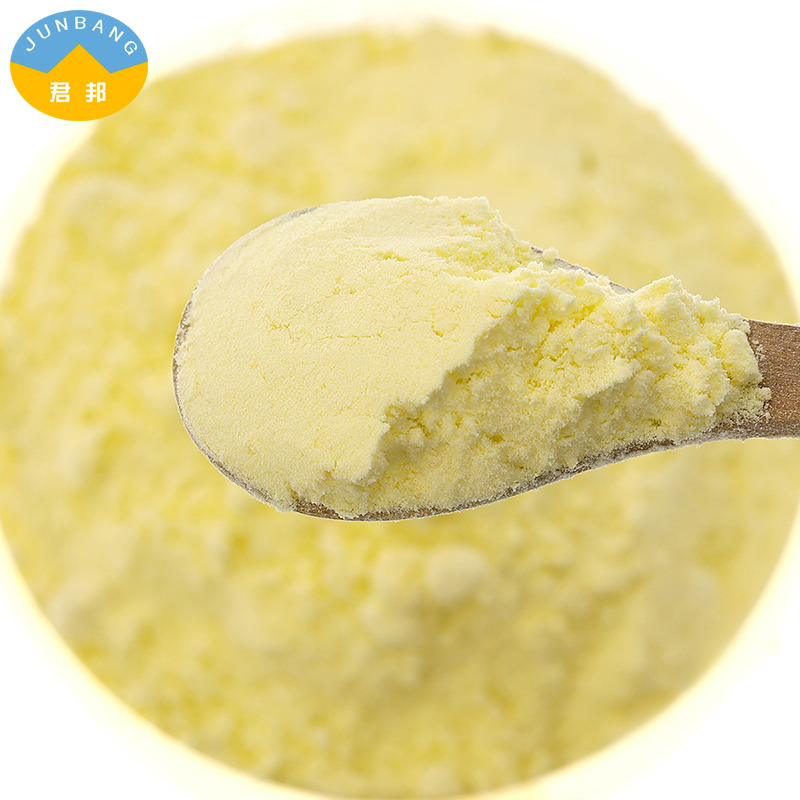
Industry professionals define Sodium Isopropyl Xanthate (SIPX) as a powerful, heteropolar sulfhydryl collector. It features a specific molecular structure engineered for robust mineral attachment. This unique profile helps it overcome the limitations of standard bulk collectors.
The mechanism of action relies on two distinct molecular parts. The non-polar hydrocarbon chain provides essential hydrophobicity. This part ensures strong, stable bubble attachment during the aeration phase. Meanwhile, its polar solidophilic group chemically bonds directly to the copper sulfide crystal lattice. They work together seamlessly. The polar end anchors to the metal, while the non-polar end pulls the particle into the froth layer.
Positioning this reagent against other market options highlights its specific value. It occupies a critical middle ground in mineral processing. We can see these differences clearly when looking at the standard xanthate family.
Collector Type | Collecting Power | Chemical Selectivity | Ideal Ore Application |
|---|---|---|---|
Sodium Ethyl Xanthate (SEX) | Weak | Very High | Clean, unoxidized, easy-to-float ores. |
Sodium Isopropyl Xanthate (SIPX) | Strong | Moderate-High | Complex copper-zinc and oxidized ores. |
Sodium Amyl Xanthate (SAX) | Very Strong | Low | Heavily tarnished ores and bulk flotation. |
This balance makes it the standard choice for modern operators. It offers noticeably stronger collecting power than Sodium Ethyl Xanthate. It also maintains much better selectivity than Sodium Amyl Xanthate. You get the strength needed to lift heavy chalcopyrite without dragging unwanted iron sulfides into your launder.
Modern beneficiation circuits face specific, measurable hurdles. Implementing a tailored collector strategy resolves these issues directly.
High-sulfur matrices usually force operators into high-lime environments. SIPX enables plants to drop circuit pH from >10 down to 7.0–8.5. You can pair it with alternative depressants like sodium pyrosulfite. Under these weakly alkaline conditions, Sodium Isopropyl Xanthate actively collects copper. It ignores iron sulfides almost entirely. This strategy drastically reduces lime consumption and prevents pipeline scaling entirely.
Mild sulfate layers block weaker chemicals from making contact. Standard ethyl collectors fail when processing stockpiled ores. The specific chain length of this isopropyl collector provides superior chemical affinity. It bypasses these microscopic sulfate barriers easily. It restores the natural floatability missed by weaker reagents. You recover particles previously destined for the tailings pond.
Many advanced circuits utilize a "two-stage grinding + two-stage flotation" setup. Utilizing SIPX alongside a secondary promoter captures a much wider size fraction. Secondary promoters often include aerofloats or dithiophosphates. This combination strategy boosts both coarse and ultra-fine recovery rates simultaneously.
Consider these proven synergy combinations for your plant:
SIPX + Sodium Pyrosulfite: Suppresses iron sulfides cleanly at neutral pH levels.
SIPX + Dithiophosphates: Enhances fine particle attachment in secondary milling stages.
SIPX + MIBC Frother: Stabilizes bubble structure specifically for heavy, oxidized chalcopyrite particles.
No chemical solution exists without operational trade-offs. Closed-loop water circuits present distinct challenges for xanthate users. Unconsumed reagents recycle back into the pre-flotation stage. This residual buildup acts as an active contaminant. It can cause unintended activation of zinc or gangue minerals early in the process.
Advanced plants deploy specific mitigation strategies to manage this. Activated carbon filtration remains highly effective. Industrial carbon can absorb up to 86 mg/g of residual xanthate. Another vital option relies on precise automated dosing control. Using online analyzers, such as Courier systems, prevents overdosing entirely. You only add exactly what the incoming ore grade demands.
Chemical instability limits also dictate storage and usage protocols. The compound is highly susceptible to hydrolysis. It breaks down rapidly in highly acidic environments (pH < 5). It converts directly into toxic carbon disulfide and alcohol. It also degrades quickly in extreme alkaline conditions. Storage areas and pulp conditioning times must be tightly monitored.
Best Practice: Keep pulp conditioning times between 2 to 5 minutes. Extended conditioning leads to premature collector degradation before the slurry reaches the flotation cells.
Transitioning away from legacy collectors requires methodical validation. You cannot swap reagents based purely on technical datasheets. Use a structured shortlisting logic to verify the economic and metallurgical fit.
First, conduct thorough ore auditing. Examine your core mineralogy profile carefully. Does your mix of chalcopyrite, chalcocite, or bornite justify an isopropyl-level collector? Highly reactive chalcocite usually requires much lower dosages. Overdosing destroys selectivity instantly.
Next, evaluate reagent compatibility. Will it synergize effectively alongside your current frothers? Pine oil and MIBC react differently when paired with stronger sulfhydryl groups. You must test these interactions dynamically.
Economic feasibility demands a broader calculation. Look beyond the unit cost per kilogram. You must calculate the operational offset. Does the reduction in lime scaling outweigh the new chemical cost? Add the fractional percentage increase in copper or gold recovery. This holistic view almost always justifies transitioning to a tailored regime.
Do not jump straight to full circuit replacement. We recommend following a strict phased testing chart.
Phase | Testing Action | Outcome Goal |
|---|---|---|
Phase 1 | Mineralogy Audit | Identify primary sulfide and oxide ratios in the feed. |
Phase 2 | Bench-Scale Flotation | Determine baseline dosage rates (typically 20g-100g/t). |
Phase 3 | Locked-Cycle Testing | Observe residual chemical buildup in closed water loops. |
Phase 4 | Pilot Column Trial | Validate overall concentrate grade and commercial recovery lift. |
Sodium Isopropyl Xanthate delivers a measurable recovery advantage for complex copper sulfide matrices. It actively combats the dual threats of high-alkaline depression and natural surface oxidation. However, it is not a universal magic bullet. Careless dosing will quickly disrupt closed-loop water systems.
Long-term success relies on modernizing your entire approach. Treat this reagent as a core component of a low-alkaline flotation strategy. Strict water chemistry oversight and automated dosing remain non-negotiable for stable operations. The days of simply dumping lime and weak ethyl collectors into a circuit are over.
We encourage metallurgical engineers to take the next analytical step. Request a Safety Data Sheet (SDS), full technical specifications, or physical lab samples. Begin your bench-scale trials to see how shifting your collector strategy unlocks trapped revenue in your tailings.
A: Dosages vary based on ore grade and oxidation level, but generally range between 20g to 100g per ton of ore. Overdosing leads to poor selectivity and frother suppression.
A: SIPX does not replace lime (a pH regulator/depressant), but its efficiency at weaker alkaline levels (pH 7-8.5) allows plants to drastically reduce lime consumption, thereby lowering scaling issues.
A: Unconsumed SIPX acts as a contaminant in recycled water, unexpectedly activating zinc or iron sulfides in early flotation stages. Advanced plants use activated carbon or aeration to neutralize residual xanthates before water reuse.
A: No. SIPX is primarily designed for sulfide ores. For fully oxidized copper ores, the surface must either be pre-sulfidized (using a sulfidizing agent) or processed using entirely different collector families (like fatty acids or hydroxamates).

