
close
Choose Your Site
Global
Social Media


Views: 0 Author: Site Editor Publish Time: 2026-11-11 Origin: Site


The global mineral processing landscape is shifting rapidly. Ore grades are declining. Mineralogy is getting increasingly complex. This reality forces metallurgists to constantly rethink their separation strategies. Lead-zinc sulfide flotation frequently suffers from poor selectivity. Precise activation of sphalerite is critical, yet it remains a tricky endeavor. Intentional surface modification is absolutely necessary. However, dumping excess reagents into the tank leads to severe overactivation. This misstep inflates operational costs. Worse, it sinks concentrate grades by floating unwanted gangue. How do you strike the right balance? Throughout this guide, we break down proven methodologies to optimize your flotation circuits, stabilize your chemical environment, and prevent costly metallurgical failures.
Lead-zinc sulfide ores present a unique metallurgical challenge. Pure sphalerite is a notoriously poor semiconductor. Its surface resists natural oxidation. Thiol-based collectors like xanthates simply cannot attach to it. As a result, sphalerite remains naturally hydrophilic and refuses to float under standard conditions. To force it to float, operators rely heavily on chemical activation.
The core of this process involves a copper-based activator. Once introduced into the pulp, the reagent dissociates and releases divalent copper ions. These ions undergo a rapid ion-exchange reaction with zinc atoms on the sphalerite lattice. Specifically, this reaction creates a highly reactive covellite-like layer. This new layer provides perfect adsorption sites for collectors, rendering the mineral hydrophobic enough for bubble attachment.
The source of these copper ions dictates your circuit stability. Using premium copper sulfate pentahydrate ensures a consistent release of active ions. High-quality industrial reagents typically feature a copper content above 25 percent and water insolubles below 0.2 percent. Technical-grade alternatives with fluctuating copper levels cause erratic activation kinetics. When heavy metal impurities inadvertently activate gangue minerals, process control slips entirely out of your hands.
Looking at the broader industry trajectory, the mining sector is currently facing a critical inflection point. Recent metallurgical analyses highlight a sharp transition toward processing highly refractory and finely disseminated ores. Consequently, the margin for chemical error has shrunk dramatically. Plants can no longer afford the outdated approach to manual reagent dosing. Instead, there is a massive push toward sensor-integrated, dynamically controlled flotation circuits. This shift aims to maximize recovery from low-grade feeds while strictly curbing reagent expenditure.
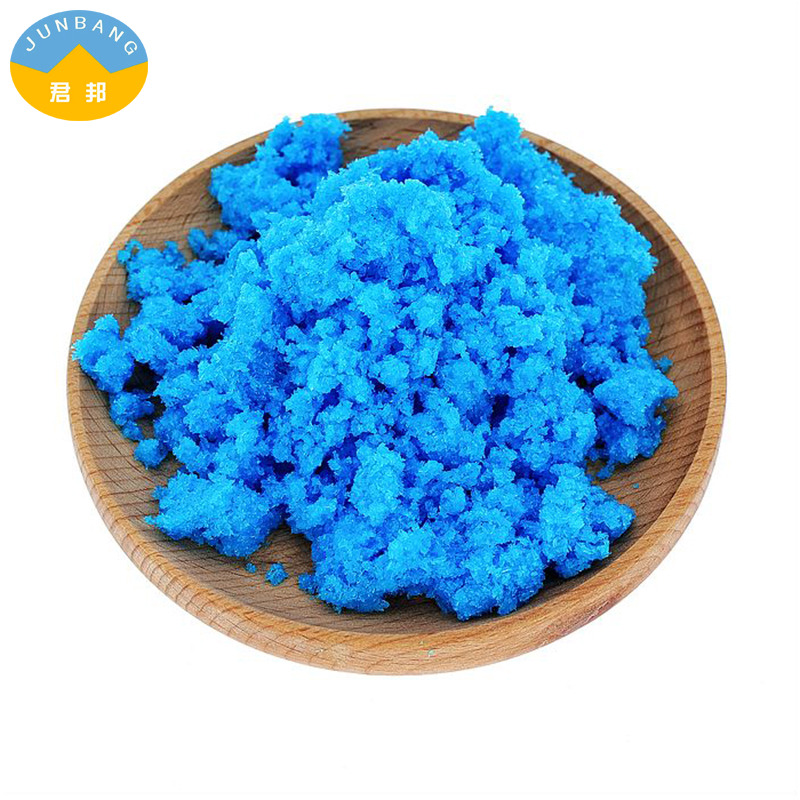
Surface modification is indispensable for zinc recovery. But the line separating optimal conditioning from excessive activation is razor-thin. Overactivation happens when copper ion concentration far exceeds the actual sphalerite surface area available. Once you cross this threshold, excess copper triggers severe metallurgical inefficiencies.
The immediate consequence is non-selective flotation. Excess copper ions readily activate iron sulfides like pyrite and pyrrhotite. These iron sulfides float alongside your sphalerite, destroying your final zinc concentrate grade. In some cases, copper even precipitates on silicate gangue, causing mechanical entrainment that further exacerbates dilution.
Pulp pH heavily influences this phenomenon. Lead-zinc flotation operates in a highly alkaline environment, typically modulated by lime. If you overdose the activator in this high-pH slurry, the excess copper reacts instantly with hydroxyl ions. This forms hydrophilic copper hydroxide precipitates. These precipitates coat mineral surfaces indiscriminately. They consume expensive collectors for absolutely zero return.
Stand at the flotation bank and observe. A voluminous, brittle froth is a massive red flag. You might also notice a slimy texture on the bubble lamellae. This points directly to hydroxide precipitates. Meanwhile, your control room will likely record an unexplained spike in collector consumption alongside a sharp drop in concentrate grades.
Guesswork has no place in modern metallurgy. The operational goal is straightforward. You must supply just enough copper to activate exposed sphalerite without leaving residual active copper in the water.
Finding this golden ratio starts in the lab. Metallurgists run batch tests with varying activator dosages. The data reveals the exact inflection point where zinc recovery peaks right before pyrite activation ruins the grade.
Table 1: Theoretical Impact of Copper Sulfate Dosage on Flotation Metrics
| Copper Sulfate Dosage (g/t) | Sphalerite Recovery (%) | Pyrite Recovery (%) | Concentrate Grade (% Zn) | Operational Status |
|---|---|---|---|---|
| 150 | 65.4 | 4.2 | 54.5 | Under-activated |
| 250 | 82.1 | 6.5 | 53.8 | Approaching Optimum |
| 350 | 94.5 | 8.1 | 52.1 | Optimal Activation |
| 450 | 95.0 | 18.4 | 46.3 | Overactivated |
| 550 | 95.2 | 29.7 | 41.0 | Severely Overactivated |
Translating static lab results to a dynamic plant requires real-time monitoring. Tracking pulp potential is highly effective. Sphalerite activation is an electrochemical process that predictably alters slurry redox potential. Installing probes directly in conditioning tanks lets operators visualize the chemical state. A sudden shift indicates surface saturation. You can then adjust the dosage before the rougher cells take a hit.
Furthermore, digitalized reagent control is becoming the new standard. Forward-thinking facilities integrate feed-forward algorithms with real-time sensors to dynamically titrate activators. This prevents slurry oversaturation and maintains peak selectivity. For a seamless upgrade, implementing comprehensive mineral processing solutions ties dosing directly to incoming ore tonnage and grade.
Successful lead-zinc separation is strictly sequential. You float the lead first while keeping the zinc depressed. Then, you activate the zinc. This demands precise synergy between depressants and activators.
During the initial lead stage, zinc sulfate serves as the primary depressant. It adsorbs onto the sphalerite surface and forms hydrophilic complexes that block collector attachment. This ensures the sphalerite remains completely inert while galena floats into the concentrate.
The real challenge hits during the transition to the zinc circuit. You must overcome the earlier depressant effect. This requires a strict conditioning window. Adding the activator too early wastes the reagent. It will react directly with residual depressants in the pulp water and form inactive complexes.
Spatial separation of reagent additions is mandatory. Route the pulp to a dedicated conditioning tank. A typical conditioning time of three to ten minutes allows copper ions to displace the depressant layer. Insufficient conditioning cripples zinc recovery. Conversely, excessive agitation can shear the fragile activation layer right off the mineral surface.
Mining deeper into complex orebodies often reveals partially oxidized sulfide zones. Oxidation tarnishes mineral surfaces. It creates coatings that physically block copper ions from reaching the underlying zinc sulfide lattice. Standard activation protocols fail completely here.
To combat surface contamination, operators use sodium sulfide. As a potent cleaner, it releases sulfide and hydrosulfide ions. These ions aggressively strip oxidized coatings from the sphalerite. They convert the surface back into a pseudo-sulfide state, making it highly receptive to activation. Utilizing high-purity modifiers with minimal insolubles is crucial for maintaining stable pulp chemistry.
However, combining these two powerful chemicals requires extreme caution. They are highly reactive with one another. If you add the activator while residual sulfide ions are still floating in the pulp, disaster strikes. They react instantly to form colloidal precipitates suspended in the water. This chemical interference completely neutralizes your activator.
Enforce a strict sequential addition to prevent this. Add the sulfidizing agent first. Allow a dedicated conditioning period for the ions to be consumed by the ore. Only after the residual sulfide concentration drops to a safe threshold should you introduce the copper-based activator.
Automated control systems are fantastic, but human oversight remains indispensable. Operators must recognize visual and physical indicators right at the launder to troubleshoot issues instantly.
Visual cues in the froth are your first line of defense. A well-activated zinc circuit exhibits a stable, tightly packed bubble structure. It usually carries a distinct brownish or golden-metallic hue. If the froth turns pale, watery, and collapses quickly, you are under-activating. On the flip side, a thick, sticky, muddy froth screams overactivation and heavy pyrite entrainment.
Standardizing chemical preparation is a non-negotiable daily practice. Mix the activator to a consistent concentration, typically ten to fifteen percent by weight. Mixing it too strongly causes localized over-concentration at the dosing point. This triggers rapid precipitation before the reagent can disperse through the dense pulp.
Table 2: Troubleshooting Matrix for Sphalerite Activation
| Observation / Symptom | Potential Cause | Recommended Action |
|---|---|---|
| Pale, brittle froth; low Zn recovery | Under-activation; insufficient dosage | Check dosing pumps; verify solution strength; increase dosage incrementally. |
| Dark, sticky froth; high Fe in concentrate | Overactivation; excess reagent activating pyrite | Reduce dosage; check pulp pH; verify depressant addition in previous stages. |
| High reagent consumption with poor recovery | Chemical interference from residual cleaners | Increase conditioning time between reagents; check for oxidized ore feed. |
| Erratic recovery rates shift by shift | Inconsistent reagent preparation | Standardize mixing protocols; ensure complete dissolution of reagent crystals. |
Keep dosing lines clean. Calibrate flow meters regularly. Ensure adequate agitation in mixing tanks. These are the fundamental habits that guarantee long-term process stability.
The rigorous demands of modern metallurgy necessitate integrated technical solutions. As global ore grades decline, your margin for dosing errors shrinks. Modern circuits must prioritize consistency, predictability, and sustainability.
The foundation of a stable circuit is premium reagent selection. Impure chemicals introduce side reactions that destabilize the froth. High-purity inputs keep your chemical baseline constant. They dissolve completely, preventing sludge build-up and blocked dosing valves. These blockages are the primary cause of erratic activation spikes in older plants.
Upgrading to advanced dosing control drastically reduces reagent waste. Streamlining the entire circuit minimizes human error. It ensures sphalerite is activated efficiently without crossing the dangerous threshold into overactivation.
Lead-zinc separation requires a delicate chemical equilibrium. Success depends entirely on controlling the activation environment, not just pouring chemicals into a tank. Dosage precision, pH management, and synergistic timing dictate your final concentrate quality.
Review your current plant protocols to identify stability gaps. Refining these processes leads directly to higher recovery rates and cleaner concentrates. To explore high-purity reagents and tailored mineral processing strategies, visit Junbang Chemical to find the exact products that match your operational needs and elevate your plant performance.
The pentahydrate form is preferred due to its high solubility and purity. It dissolves readily in water to provide a predictable release of active copper ions. Lower-grade technical variants often contain insoluble impurities or heavy metals. These impurities inadvertently activate gangue minerals, leading to poor selectivity and erratic plant performance.
Pulp pH is a critical variable. Lead-zinc flotation usually occurs in a highly alkaline environment. If the pH is too high or if the activator is overdosed, copper ions react with hydroxyl ions to form hydrophilic copper hydroxide precipitates. These precipitates coat minerals indiscriminately, wasting the reagent and preventing collector attachment.
Yes, if not managed correctly. It is a powerful cleaner used for oxidized ores. If the activator is added while residual sulfide ions are still present in the pulp, the two chemicals react instantly. They form colloidal precipitates in the water, completely neutralizing the activator before it reaches the mineral surface.
Operators typically notice the froth becoming excessively thick, sticky, and muddy in appearance. This indicates the flotation of iron sulfides like pyrite. Additionally, there will be a noticeable drop in the zinc concentrate grade alongside an unexplained increase in the consumption of collectors and frothers.
Dosages should be adjusted dynamically. Modern plants do this continuously using automated control systems linked to pulp potential and pH sensors. In manual plants, operators must conduct shift-by-shift evaluations of the froth and adjust dosages whenever there is a known change in the ore blend or oxidation level.
The ideal conditioning time typically ranges from three to ten minutes. This window allows copper ions sufficient time to displace the depressant layer and form a reactive surface. Insufficient time leads to poor recovery, while excessive conditioning can cause the fragile activation layer to shear off due to mechanical attrition in the tank.
Pyrite floats when the circuit is overactivated. If the copper ion concentration exceeds what the sphalerite surfaces can absorb, the excess ions begin activating iron sulfides. Once activated, pyrite becomes hydrophobic and floats alongside the sphalerite, significantly diluting the final zinc concentrate grade.

