
close
Choose Your Site
Global
Social Media


Views: 0 Author: Site Editor Publish Time: 2026-11-03 Origin: Site


Froth flotation remains one of the most critical unit operations in modern mineral processing. It acts as the primary gateway for extracting precious metals like gold and silver from complex, low-grade ore bodies. Every day, plant metallurgists stare at assay results, navigating a notoriously difficult balancing act. They must maximize recovery rates to capture every payable ounce while maintaining stringent concentrate grades to avoid heavy smelter penalties. Choosing the wrong collector chemistry triggers severe financial consequences. An overly aggressive reagent pulls massive volumes of barren pyrite into the launder, inflating downstream refining costs. Conversely, a weak collector allows fine precious metals to slip past the scavenger cells and vanish into the tailings dam.
To tackle these daily operational bottlenecks, processing plants rely heavily on two main families of sulfhydryl collectors. We are talking about Xanthates and Dithiophosphates. This comprehensive guide provides an objective, deep-dive comparison of these two chemical giants. By exploring their specific mechanisms, chemical behaviors, and practical plant applications, metallurgical teams can make data-driven decisions to optimize their unique flotation circuits.
Looking at current industry trajectories, the mining sector is witnessing a rapid depletion of easily processable, free-milling gold deposits. Recent metallurgical analyses highlight a definitive global shift toward processing increasingly complex, refractory polymetallic sulfide ores. Precious metals are now more finely disseminated within penalty-inducing minerals than ever before. This reality forces modern concentrators to abandon simple, one-size-fits-all reagent regimes. Today, plants are compelled to adopt highly specialized chemistry to achieve viable mineral separation. This urgent industry need for both strong pulling power and pinpoint mineral separation is exactly what fuels the ongoing debate of dithiophosphate versus xanthate.
To truly grasp the nuances of reagent selection, we must first look at the fundamental mechanics occurring inside the flotation cell. Collectors are specialized surfactant chemicals designed to adsorb onto the surfaces of target minerals suspended in the slurry. By attaching their polar heads to the mineral surface and exposing their non-polar hydrocarbon tails to the aqueous environment, they render the valuable particles water-repellent. This critical chemical alteration allows the mineral to attach to rising air bubbles, floating to the surface to form a mineralized froth.
Precious metals present a unique metallurgical hurdle. Gold and silver are rarely found in clean, isolated states. Rather, they are intricately hosted within complex polymetallic sulfide matrices, locked away alongside chalcopyrite, galena, arsenopyrite, or pyrite. The primary operational objective is to selectively float these valuable particles while intentionally depressing the barren gangue rock.
Xanthates have been the undisputed workhorses of the sulfide mineral processing industry for nearly a century. Their enduring dominance stems from their exceptional collecting power, rapid flotation kinetics, and highly competitive cost per ton of ore processed.
When an operator needs to aggressively scavenge the last recoverable ounces of gold before the slurry hits the tailings dam, they frequently turn to specific xanthate formulations. A prime example in gold-bearing sulfide operations is sodium isobutyl xanthate. Featuring a branched four-carbon alkyl chain, this reagent provides a robust, aggressive balance of solubility and hydrophobicity. High-quality industrial variants typically boast a purity exceeding 90 percent, ensuring minimal dosing waste and maximum active component delivery to the slurry.
This specific xanthate is renowned for its immense pulling power. In rougher and scavenger circuits, where the primary metallurgical objective is maximum bulk recovery, it excels. Even if a gold particle is only partially liberated, heavily tarnished, or weakly associated with a floatable sulfide, a strong xanthate will typically ensure it is coated and pulled over the lip into the froth.
While highly effective for bulk recovery, this aggressive nature comes with distinct operational trade-offs. The major advantage is exceptional bulk recovery rates and incredibly fast flotation kinetics at a cost-effective procurement price. However, the poor selectivity tends to float pyrite and penalty elements alongside the gold. Furthermore, it is highly unstable at low pH, rapidly decomposing into hazardous carbon disulfide gas below pH 8. Over-dosing without proper frother pairing can also cause brittle, unmanageable froths.
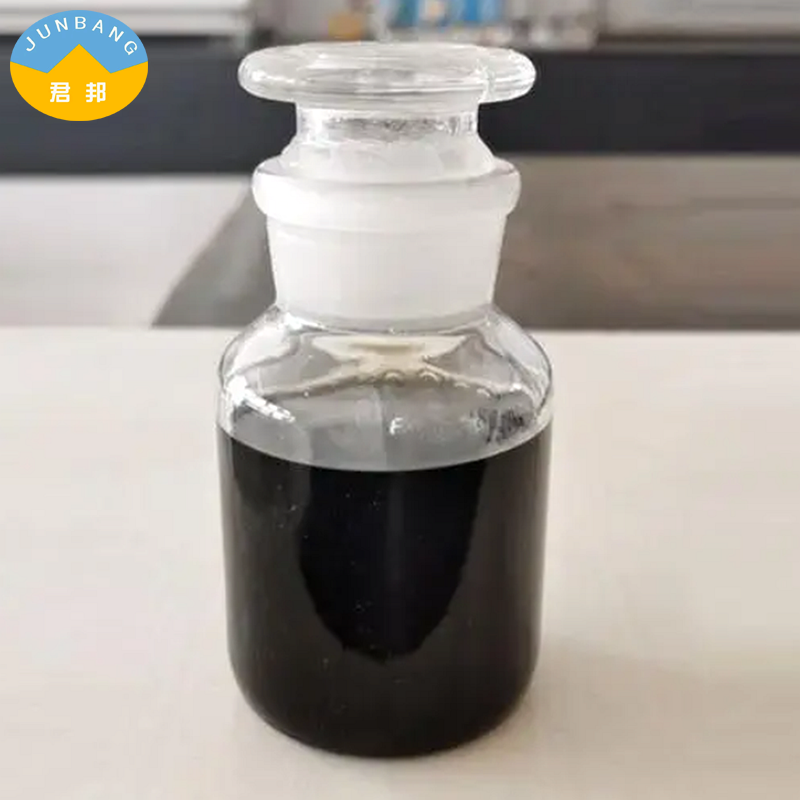
If xanthates are the blunt instruments of the mineral processing world, dithiophosphates are the precision surgical tools. Chemically, these are dialkyl or diaryl dithiophosphoric acids and their salts. While they are inherently weaker collectors than xanthates in terms of raw pulling power, they offer unparalleled selectivity. This makes them absolutely invaluable when dealing with complex, refractory ore bodies.
A prominent and historically revered reagent in this family is dithiophosphate 25. This specific diaryl collector, typically supplied as a dark brown liquid with an active dicresyl dithiophosphoric acid content, has a long, proven track record. It is highly successful in the recovery of silver, gold, and complex lead-zinc ores.
Its primary metallurgical advantage lies in its ability to float precious metals while exhibiting a strong natural depression effect on iron sulfides like pyrite and marcasite. Because it contains aromatic aryl groups, it carries inherent frothing properties. This dual-action capability often allows operators to reduce or entirely eliminate supplementary frothers in the circuit, simplifying the overall reagent dosing system.
Because of their specialized nature, these reagents require a nuanced approach to application and dosage control. They offer exceptional, pinpoint selectivity against pyrite and sphalerite, yielding high-grade concentrates. They are highly stable across a broad pH range, including neutral and mildly acidic circuits. The main drawbacks include slower flotation kinetics compared to xanthates, weaker pulling power for heavily oxidized ores, and a higher upfront procurement cost per kilogram.
To make informed procurement and operational decisions, metallurgical teams must evaluate these two collector families across several critical, real-world parameters. Below is a practical comparison matrix designed for plant engineers.
| Feature | Xanthates | Dithiophosphates |
|---|---|---|
| Collecting Power | Extremely strong, aggressive bulk collection | Moderate, requires clean mineral surfaces |
| Selectivity | Poor; actively floats iron sulfides | Excellent; strong natural pyrite depression |
| Optimal pH Range | Highly alkaline, typically pH 9.0 to 11.0 | Broad stability, effective from pH 4.0 to 9.0 |
| Frothing Properties | None; requires dedicated frothers | Aryl variants provide stable, inherent frothing |
| Physical State | Hygroscopic solid pellets or powder | Stable aqueous liquids |
Circuit chemistry heavily dictates operating expenses. Xanthates are strictly alkaline-dependent. If the pulp pH drops below 8.0, xanthates begin to hydrolyze and decompose, losing their collecting efficacy entirely. Therefore, xanthate circuits require massive additions of lime from the silos to maintain a highly alkaline environment. In contrast, dithiophosphates exhibit superior chemical stability. They remain intact and functional at much lower pH levels. This robust stability leads to substantial cost savings, as the plant consumes drastically less lime or sodium hydroxide for pH modification.
Modern mineral processing plants rarely rely on a single collector to achieve their metallurgical targets. Empirical data and decades of plant operation have proven that blending reagents creates a synergistic effect. This blend consistently outperforms any single chemical used in isolation.
Synergy in flotation occurs when a carefully calibrated mixture of collectors yields a recovery or grade higher than the sum of their individual performances. In a typical gold-silver circuit, metallurgists design a mixed collector system utilizing a primary and a secondary collector. For instance, an operator might dose a strong xanthate directly into the grinding circuit to act as the primary bulk collector. This ensures all valuable minerals are rendered hydrophobic early in the process. Subsequently, dosing a highly selective liquid reagent like sodium diisobutyl dithiophosphate as a secondary scavenger in the cleaner cells targets the specific, hard-to-float gold particles that the xanthate missed, all without floating additional pyrite.
While every ore body is mineralogically unique, standard industry practice often utilizes blending ratios of 70 to 30 or 80 to 20, favoring the bulk collector. The point of addition is also critical. Adding the slower-acting dithiophosphate earlier in the circuit allows it sufficient conditioning time to attach to complex particles. Meanwhile, the fast-acting xanthate can be staged closer to the flotation bank to provide an immediate boost to recovery.
Selecting the right reagent suite extends far beyond chemical theory. It involves practical, economic, and logistical realities that impact the entire mining operation. Plant managers must evaluate the following actionable criteria.
First, ore mineralogy dictates the choice. Free-milling gold ores, where the precious metals are clean and easily liberated during grinding, may only require a simple, low-dose xanthate regime. Refractory gold ores demand highly specialized approaches. In scenarios where sub-microscopic gold is locked within the crystal lattice of pyrite, selective dithiophosphates are absolutely essential to manage the massive volume of iron sulfides and prevent them from overwhelming the concentrate thickeners.
Second, procurement managers must conduct a rigorous cost analysis focusing on return on investment rather than just the reagent price. While xanthates are undeniably cheaper by weight, the total cost of ownership must be calculated. A cheap xanthate might require exorbitant amounts of expensive lime to maintain a pH of 10.5. Furthermore, if the xanthate floats too much pyrite, the resulting low-grade concentrate incurs severe financial penalties at the smelter. Investing in a more expensive, highly selective dithiophosphate often yields a much higher overall return by slashing lime consumption and maximizing smelter payouts.
Finally, storage and handling safety protocols differ significantly. Solid xanthates are hygroscopic and pose a severe risk of spontaneous combustion if exposed to moisture and heat. They emit a pungent odor requiring robust ventilation. Dithiophosphates are generally supplied as stable, non-flammable liquids. While they eliminate combustion risks, they are industrial chemicals requiring proper liquid handling protocols, including chemical-resistant pumps and secondary containment systems.
The ongoing debate between dithiophosphate and xanthate is not a matter of determining which chemical is objectively better. Rather, it is about identifying which reagent or synergistic combination is the perfect fit for your specific ore body and plant economics. Xanthates pull hard, ensuring maximum recovery. Dithiophosphates pull smart, ensuring premium grades and lower operating costs.
We strongly recommend that plant metallurgists conduct rigorous, bench-scale locked-cycle testing before implementing full-scale plant changes. Start by establishing a baseline using a standard xanthate, and gradually introduce selective dithiophosphates to map out the optimal recovery-to-grade ratio. If you are looking to optimize your flotation circuit, we invite you to explore the high-quality reagent solutions at Junbang Chemical. Our technical team offers custom reagent blending, laboratory sample requests, and comprehensive metallurgical support to help you maximize your precious metal recovery.
While technically possible for ores containing highly floatable, clean free gold, it is rarely recommended in industrial practice. Dithiophosphates are generally too weak to act as the sole collector for complex ores. Relying on them entirely leads to sluggish flotation kinetics and unacceptable losses of precious metals in the tailings. A blended approach utilizing both reagents is almost always the preferred industry standard.
The primary difference lies in their chemical structure and resulting physical properties. Dithiophosphate 25 is an aryl dithiophosphate. It possesses strong inherent frothing properties and is exceptionally well-suited for silver-rich galena ores. Sodium diisobutyl dithiophosphate is an alkyl dithiophosphate. It has little to no frothing capability but offers pinpoint selectivity for copper-gold sulfides, actively rejecting pyrite.
Xanthates are salts of weak acids and strong bases. In acidic or neutral environments, they undergo rapid hydrolysis. The chemical bonds break down, releasing hazardous carbon disulfide gas and rendering the chemical useless as a collector. To maintain chemical integrity and collecting power, these circuits must be strictly alkaline, typically maintained between pH 8.5 and 11 using lime.
Choosing the right ratio requires bench-scale flotation testing. For refractory ores heavy in pyrite, engineers typically start with a 50 to 50 blend of xanthate and dithiophosphate. If the concentrate grade is too low due to excess iron, the ratio of dithiophosphate is increased. If overall gold recovery is suffering, the xanthate dosage is slightly increased to boost the pulling power.
From a fire safety perspective, yes. Solid xanthate pellets are prone to spontaneous combustion if improperly stored and exposed to moisture and high temperatures. Dithiophosphates are typically supplied as stable aqueous liquids and do not carry this specific combustion risk. However, they are industrial chemicals that can be corrosive, requiring standard liquid chemical safety practices, appropriate PPE, and spill containment.

