
close
Choose Your Site
Global
Social Media


Views: 0 Author: Site Editor Publish Time: 2026-10-03 Origin: Site


Are declining ore grades destroying your plant's profitability? You are certainly not alone. In the highly competitive field of mineral processing, maximizing the recovery and grade of copper and gold ores remains a persistent operational headache. As global high-grade reserves vanish, processing facilities are forced to handle ores characterized by finer dissemination and nightmare mineralogy. Plant metallurgists must continuously tweak their reagent suites just to keep metallurgical efficiency afloat.
Enter Ester 105. This highly efficient flotation chemical is gaining serious traction across the mining sector for its raw collecting power and sharp selectivity. Complex mineralogy demands highly selective reagent suites. However, determining whether a new chemical fits a specific ore body requires rigorous empirical evaluation. This guide breaks down the fundamental role of this advanced reagent in copper and gold flotation circuits. We will objectively compare it to traditional industry standards and provide a structured framework for evaluating its effectiveness within your existing collector scheme.
The global mineral processing sector is currently undergoing a massive operational shift. Recent metallurgical trend analyses reveal a sharp departure from traditional bulk collectors. Why is this happening? Smelter penalties are becoming ruthless. Processing plants worldwide are dealing with refractory ores loaded with arsenic, bismuth, and highly reactive pyrite. You simply cannot afford to pull penalty elements into your final concentrate anymore.
Consequently, the market is aggressively pivoting toward highly selective specialty reagents. Plant managers are prioritizing separation efficiency over brute-force mass pull. Using non-selective collectors in these complex scenarios means the flotation circuit recovers penalty elements right alongside the target metals. Simply pulling more mass to increase recovery is a dead economic strategy. High mass pulls inevitably drag iron sulfides into the final product. This dilutes the concentrate grade and inflates downstream transportation costs. Adapting your plant chemistry to meet these stricter smelter penalty thresholds is no longer optional. It is a matter of survival.
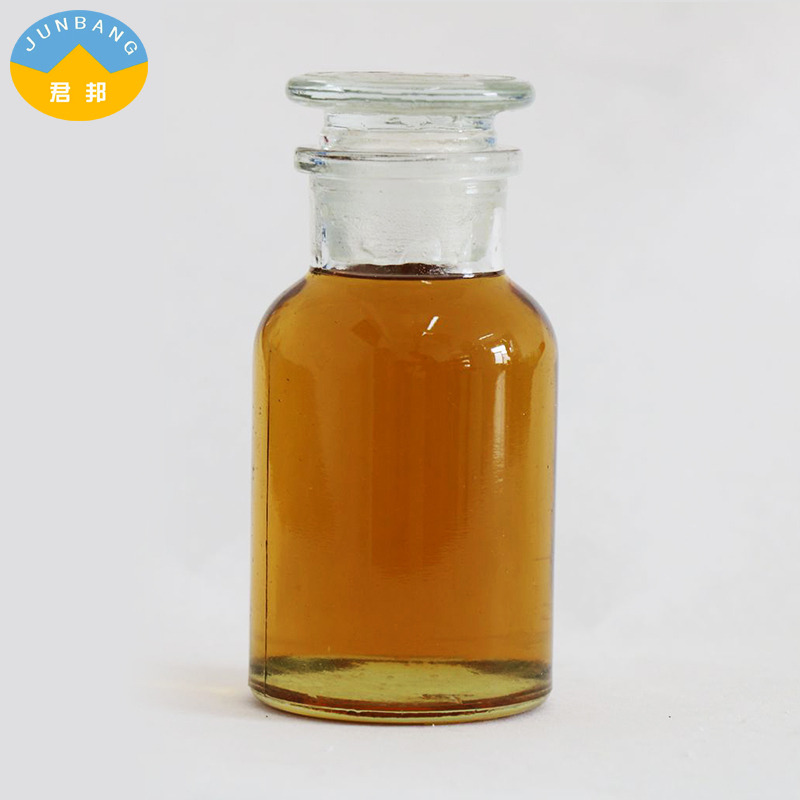
To effectively implement any new reagent, you must first understand its fundamental chemical behavior within a flotation cell. The Ester-105 collector is a specialized sulfide collector engineered specifically for floating copper minerals and associated precious metals. Forget broad-spectrum commodity xanthates that pull tons of unwanted gangue. This modified ester-based formulation provides targeted, laser-focused adsorption.
It typically presents as an amber to dark brown liquid with a density ranging from 0.98 to 1.05. The functional mechanism relies heavily on chemisorption. Active functional groups within the molecule exhibit a strong chemical affinity for the copper ions present on the surface of minerals like chalcopyrite, bornite, and chalcocite. When introduced into the pulp, these groups form strong coordination bonds with the metallic ions. This creates a robust hydrophobic layer.
Importantly, the structural configuration creates steric hindrance when encountering iron sulfides. This structural bulkiness prevents the chemical from strongly activating pyrite. The iron sulfide remains hydrophilic and reports directly to the tailings. From a practical standpoint, handling characteristics matter just as much as metallurgy. Operators walking the flotation deck appreciate the stable liquid form. It eliminates the hazardous combustible dust issues commonly associated with solid reagents. It exhibits excellent solubility in aqueous environments, ensuring rapid distribution throughout your conditioning tanks.
Transitioning to a new reagent requires a clear understanding of how it stacks up against established industry standards. Comparing performance provides a baseline for expectations and justifies the laboratory investment. Below is a core comparison of these standard flotation reagents.
| Feature | Ester 105 | Z-200 Thionocarbamate | Dithiophosphate 25 |
|---|---|---|---|
| Primary Role | Highly selective collector | Standard selective collector | Collector & Frother |
| Physical State | Amber/dark brown liquid | Amber liquid | Dark brown liquid |
| Optimal pH Range | 8.5 - 10.5 | 10.0 - 11.5 | 7.0 - 10.0 |
| Pyrite Rejection | Excellent | Excellent | Moderate |
| Frothing Property | None | None | Strong |
The Z-200 thionocarbamate has long been considered the industry workhorse for copper sulfide flotation. It offers excellent selectivity against pyrite in highly alkaline environments. While Z-200 is highly effective, empirical plant data indicates that Ester 105 offers notably faster flotation kinetics in certain ore types. Faster kinetics mean target minerals are recovered earlier in the rougher bank. This reduces your reliance on scavenger cells. Furthermore, Z-200 typically requires a highly alkaline environment near pH 10.5 to maximize its selectivity. The ester-based alternative maintains its selective properties across a broader, lower pH range. This expanded operating window leads to substantial reductions in lime consumption.
Dithiophosphate 25 is another standard reagent valued for its dual functionality as both a collector and a frother. The most significant difference here lies in the froth phase. Dithiophosphate possesses strong frothing properties. While beneficial in some circuits, this dual nature makes it difficult for operators to control collection and frothing independently. If you need more collection power, adding more dithiophosphate inadvertently increases froth volume. This often leads to gangue entrainment. Ester 105 is fundamentally a pure collector. It imparts virtually no frothing action, allowing you to precisely control the froth structure with a dedicated frother.
Modern mineral processing rarely relies on a single silver bullet chemical. Ore bodies are heterogeneous. They contain a chaotic mix of fast-floating, slow-floating, fully liberated, and composite particles. To achieve the theoretical maximum on your grade-recovery curve, you must design synergistic reagent suites. Blending leverages the thermodynamic advantages of mixed adsorbed layers on the mineral surface.
When two complementary collectors co-adsorb onto the mineral surface, magic happens. A highly selective collector ensures grade is maintained. A stronger, more aggressive secondary collector ensures coarse particles are not lost to tailings. A highly successful strategy in complex copper porphyry ores involves utilizing the ester collector in conjunction with Z-200. Operators dose the ester into the primary grinding mill to drive rapid kinetics and secure the bulk of the copper early. Z-200 is then applied in the scavenger circuit to capture slow-floating middlings.
In ore bodies where precious metals are partially oxidized, pairing it with dithiophosphate 25 creates a robust safety net. The ester acts as the primary driver for the bulk copper sulfide matrix. It ensures high selectivity against iron. Simultaneously, a tiny secondary dose of dithiophosphate targets tarnished gold particles and stabilizes the froth structure without overwhelming the launders.
Adopting a new collector is a major operational decision requiring empirical validation. A structured, data-driven evaluation process mitigates risk. The evaluation must follow a strict three-phase methodology.
Phase 1: Laboratory Bench Testing
The foundation of any evaluation is controlled bench-scale testing. Set up the Denver cell and conduct multiple rougher and cleaner kinetic tests using your plant's current standard operating procedures. This establishes a reliable baseline. Next, introduce the new collector and generate dosage response curves. Typical dosages range from 10 to 50 grams per ton. Evaluate performance across different pH regimes and target P80 grind sizes. Testing at pH 8.5, 9.5, and 10.5 is critical to identifying potential lime savings.
Phase 2: Locked-Cycle Testing
Bench tests are open-circuit. They do not account for the impact of circulating loads returning from cleaners to roughers. Locked-cycle testing simulates continuous plant operation. Run a minimum of six cycles to ensure the circuit reaches equilibrium. Pay close attention to the circulating load mass. A highly selective collector should drastically reduce the volume of material circulating in the cleaner block. This increases available residence time and reduces gangue entrainment risks.
Phase 3: Full-Scale Plant Trials
Once laboratory data confirms a positive economic outcome, move to the plant. The most statistically sound method is A/B testing on parallel flotation banks. If parallel testing is impossible, conduct time-based trials such as two weeks on the standard suite and two weeks on the new suite. Establish clear KPIs before the trial begins. Conduct frequent shift sampling, monitor froth visual characteristics, and track secondary consumable usage daily.
A common pitfall in reagent procurement is evaluating chemicals solely based on their price per kilogram. Advanced specialty collectors command a premium price compared to basic xanthates. However, the true measure of a reagent's value is its impact on overall profitability. You must calculate this through a comprehensive Net Smelter Return.
Plant managers must shift their focus entirely to metallurgical value. In a standard copper-gold operation, reagent costs represent a tiny fraction of total operating expenditures. Metal recovery dictates total revenue. A collector that costs slightly more per kilogram but increases copper recovery by a fraction of a percent pays for itself exponentially. Calculate the value of a one percent increase in overall copper recovery over an annual production cycle.
Furthermore, a higher concentrate grade reduces shipping and smelting costs. The ROI calculation must also include indirect operational savings. If your rougher circuit can operate at a pH of 9.0 instead of 10.5, the reduction in lime consumption is massive. Rejecting pyrite early in the rougher stage also reduces the mass pull to the regrind mill, lowering grinding media consumption and saving electrical energy.
To extract maximum metallurgical benefit, you must strictly follow correct application procedures. The point of addition greatly influences collector efficiency. For maximum adsorption, add the chemical directly to the grinding mill. Using positive displacement pumps to dose into the high-shear environment of the mill ensures thorough dispersion. It allows the chemical to contact freshly sheared, unoxidized mineral surfaces immediately.
Proper contact time is required for the chemical to adsorb onto hydrophobic mineral surfaces. A conditioning time of two to five minutes is optimal. You must verify this during bench testing based on your specific ore kinetics. Regarding storage, the chemical is generally stable and operator-friendly. Store it in a cool, well-ventilated area away from direct sunlight. Operators should always consult the specific Safety Data Sheet provided by the manufacturer for granular safety guidelines.
Evaluating new reagents unlocks hidden value in complex ores. It is a strategic necessity for mature flotation circuits facing declining feed grades. Traditional collectors certainly have their place and remain staples in the industry. However, integrating an advanced ester formulation into your collector scheme can dramatically improve copper and gold recovery while offering excellent selectivity against reactive iron sulfides. By following a structured evaluation framework, metallurgists can confidently optimize their circuits. Take the next step toward maximizing your plant's profitability. To find the exact reagent formulation tailored to your complex ore body, visit Junbang Chemical today and request a technical consultation or testing sample.
It is highly effective for complex sulfide ores containing chalcopyrite, bornite, chalcocite, and gold-bearing sulfides. It performs exceptionally well in polymetallic ore bodies where rejecting iron sulfides like pyrite and pyrrhotite is the primary metallurgical bottleneck to achieving a saleable concentrate grade.
While technically possible depending on your specific circuit design, many processing plants find the best metallurgical results by using them synergistically. It can be utilized as the primary, fast-acting collector in the roughers, with Z-200 acting as a secondary cleaner collector to optimize the overall grade-recovery curve.
No. It is a dedicated sulfide collector and possesses minimal to no frothing properties. This allows plant metallurgists to control the collecting and frothing phases completely independently by adding a dedicated, separate frother to the circuit.
Optimal dosage varies significantly based on run-of-mine head grade, mineralogical complexity, and target particle size. It typically ranges from 10 to 50 grams per ton of ore processed. The exact economical dosage must be determined through systematic laboratory bench testing followed by locked-cycle tests.
Because it is a highly selective collector that does not create excess persistent froth, it generally improves downstream thickening and filtration performance. Circuits plagued by tenacious froth caused by dual-purpose reagents often see faster settling rates and lower cake moisture when switching to a pure collector system.
When stored in original, sealed containers in a cool, dry, and well-ventilated environment, ester-based collectors typically maintain their chemical stability for 12 to 24 months. They should be kept away from extreme heat, direct sunlight, and strong oxidizing agents to prevent degradation of the active functional groups.

