
close
Choose Your Site
Global
Social Media


Views: 0 Author: Site Editor Publish Time: 2026-10-09 Origin: Site


In the high-stakes environment of mineral processing, reviewing a daily metallurgical sheet that shows elevated tailings losses or severe smelting penalties is an ongoing operational headache. Plant profitability rests on the fine line between concentrate grade and metal recovery. Choosing your primary sulfide collector shapes that outcome more than almost any other operational parameter.
Xanthate chemistry has anchored sulfide flotation circuits for nearly a century. Even so, daily mill operations demonstrate that uniform chemistry does not yield uniform recovery. The hydrocarbon chain length directly dictates both bubble-particle attachment kinetics and mineral selectivity.
Recent operational data across global operations points to an inescapable trend: run-of-mine ore grades continue to decline while mineralogical complexity and fine dissemination increase. Modern processing facilities can no longer afford broad-spectrum, legacy reagent recipes. Instead, metallurgical teams increasingly deploy staged, customized collector suites. This targeted approach isolates clean concentrates early, depresses penalty elements before cleaner stages, and mitigates soaring energy costs tied to regrind circuits.
Process metallurgists and procurement personnel often face a clear operational fork in the road: should the circuit run on SIBX, PAX, or SIPX? An excessively aggressive collector floats barren iron sulfides, diluting concentrate value and triggering heavy smelter penalties. On the flip side, an under-strength chemical allows valuable mineral grains to slip straight into the tailings pond. This technical guide breaks down the core chemistry, real-world operational benchmarks, and plant-floor selection criteria across the leading xanthate collectors.
Understanding xanthate behavior begins at the solid-liquid-gas interface. Flotation collectors adsorb chemically onto sulfide mineral surfaces through chemical bonding between their polar dithiocarbonate group and the transition metal atoms exposed on the mineral lattice.
Once bound, the non-polar hydrocarbon tail points outward toward the bulk aqueous phase. This molecular orientation creates a hydrophobic film across the particle surface. As pressurized air shears into microbubbles throughout the flotation cell, these water-repelling mineral grains attach to rising bubbles. They travel upward into the froth layer to be pulled into the concentrate launder.
The operational differences between xanthates trace back to the length and structure of their alkyl chains. As the number of carbon atoms increases, the chemical shifts along a distinct metallurgical spectrum.
Matching real reagent chemistry to plant targets requires evaluating purity, active content, and chemical formulation. The table below outlines key parameters for standard commercial xanthate collectors used in base metal circuits.
| Collector Name | Primary Structure | Active Content (Purity) | Relative Collecting Power | Relative Selectivity | Typical Circuit Stage |
|---|---|---|---|---|---|
| SIPX | 3-Carbon Branched (Sodium) | ≥ 90.0% | Moderate | High | Rougher / Cleaner Stages |
| SIBX | 4-Carbon Branched (Sodium) | ≥ 90.0% | High | Moderate to High | Primary Rougher / Bulk Flotation |
| PAX / SIAX | 5-Carbon Chain (Potassium / Sodium) | ≥ 85.0% - 90.0% | Very High | Low | Scavenger / Bulk Sulfide Circuits |
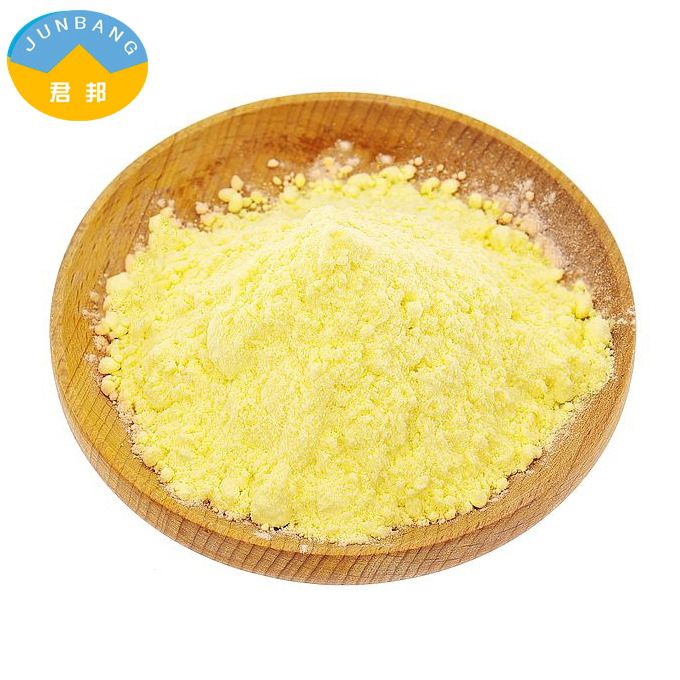
Equipped with a compact three-carbon group, sodium isopropyl xanthate operates with surgical precision. It delivers just enough hydrophobic pull to lift clean base metal sulfides, making it a reliable tool for tough metallurgical separations.
SIPX excels in complex polymetallic ores such as lead-zinc and copper-zinc systems. When downstream smelter contracts penalize high zinc contents in your copper or lead concentrates, SIPX provides the needed selectivity. Dosing this collector in primary roughers and cleaner cells pulls well-liberated values immediately, which keeps cleaner circulating loads low and cuts the need for massive depressant additions.
The primary benefit of SIPX lies in its ability to leave barren iron sulfides behind in the pulp. As a result, concentrate grades run consistently higher. The trade-off shows up in circuits handling tarnished, composite, or coarse particles: SIPX lacks the brute strength to float them, which can inflate tailings losses if it is run as the sole collector.
When daily operations require a flexible reagent that tolerates fluctuating feed grades and shifts in head assays, metallurgists turn to sodium isobutyl xanthate. With its branched four-carbon tail, SIBX strikes the most functional balance between recovery and concentrate grade across base metal processing plants worldwide.
SIBX serves as the default workhorse for copper porphyries, lead-zinc operations, and activated zinc flotation circuits. It shows strong affinity for chalcopyrite, galena, and copper-activated sphalerite under standard circuit alkalinity. Plant operators also use it for bulk sulfide flotation where minor iron sulfide pull is either tolerated or managed downstream.
SIBX delivers reliable metal recovery while maintaining respectable concentrate grades. It handles shifting plant water temperatures and water recycling variations far better than shorter-chain alternatives. However, because it carries greater collecting force than SIPX, it can pull fine pyrite into the froth. In circuits with reactive iron gangue, keeping target grades often requires higher lime dosing to depress iron minerals.
Occupying the high-strength end of the collector spectrum, potassium amyl xanthate and sodium isoamyl xanthate provide exceptional collecting force. Both rely on a five-carbon alkyl chain that delivers intense surface hydrophobicity across almost any exposed sulfide surface.
Amyl collectors excel when mineral recovery takes clear priority over selectivity. They are the standard choice for scavenger banks, where their strong pulling power catches locked or composite grains before the stream exits to tailings. These reagents also prove valuable when treating surface-oxidized ores, slow-floating nickel sulfides such as pentlandite, and auriferous pyrite systems where gold is locked inside iron sulfide matrices.
The clear advantage of five-carbon collectors is raw recovery performance. They pull difficult, tarnished, and locked mineral grains that shorter-chain xanthates leave behind. The primary drawback is poor selectivity. An unmetered slug of PAX into a rougher circuit can quickly pull barren pyrite and pyrrhotite, causing concentrate grades to drop precipitously.
Choosing between these collectors ultimately comes down to the core trade-off of mineral processing: concentrate grade versus metal recovery. Maximizing metallurgical recovery brings more metal units to market, but shipping lower-grade concentrates drives up freight costs and incurs expensive smelting penalty charges.
Ranking collectors by selectivity yields a clear hierarchy: SIPX > SIBX > PAX/SIAX. Shorter-chain collectors minimize the flotation of arsenic, antimony, and iron-bearing sulfides. For operations facing strict smelter penalty thresholds, using SIPX in rougher or cleaner circuits directly protects net smelter return terms.
When evaluated by collecting force, the order completely flips: PAX/SIAX > SIBX > SIPX. For operations running low-grade deposits or handling fine, composite minerals, metal lost to final tailings cannot be recovered. Deploying strong amyl collectors ensures maximum mineral capture, leaving the separation of gangue minerals to downstream cleaning stages.
Because every ore body features unique mineralogy and liberation profiles, successful reagent schemes match collector strength to specific circuit demands.
Porphyry copper systems running chalcopyrite typically use SIBX as their standard primary collector. It floats liberated copper minerals rapidly under moderate lime conditions. If assay data shows that gold values are tied up in pyrite matrices, switching or supplementing the bank with PAX pulls the auriferous pyrite into a bulk concentrate for downstream regrinding or leaching.
Differential lead-zinc flotation requires careful collector control. Operators rely on SIPX in the lead roughers to lift galena cleanly without prematurely pulling sphalerite or iron gangue. After zinc activation with copper sulfate in the downstream circuit, metallurgists generally switch to SIBX to secure steady zinc recovery.
Pentlandite often floats sluggishly and frequently coexists with heavy pyrrhotite gangue. Weaker collectors struggle to build adequate hydrophobicity on these mineral surfaces. In these circuits, PAX and SIAX provide the collecting strength needed to recover fine and middling nickel values.
Modern flotation circuits rarely run on a single collector added at a single point. Mineral feeds naturally contain a spread of clean, tarnished, fully liberated, and composite particles. Managing this distribution requires split-addition strategies.
The most dependable approach profiles collector strength across the flotation bank. Operators introduce a selective reagent such as SIPX or SIBX at the head of the rougher cells. This pulls high-grade, fast-floating particles immediately, keeping final cleaner circuits stable. As pulp flows toward the scavenger cells, operators transition to dosing PAX or SIAX. This aggressive finish pulls sluggish middlings and tarnished grains, locking in target recovery before tailings leave the mill.
Solid xanthates are chemically active salts that require controlled storage and preparation to avoid safety hazards and maintain metallurgical effectiveness.
Optimizing a sulfide flotation circuit demands matching your collector to the specific mineralogy of your ore. SIPX functions as a precise tool for high concentrate grades and clean separations. SIBX delivers reliable, day-in, day-out performance across shifting plant feeds. PAX and SIAX provide the heavy pulling power needed to recover oxidized values, slow-floating nickel, and locked gold-bearing sulfides.
Targeted metallurgical testing on your current mill feed helps determine the most effective collector balance. Reach out to the technical team at Junbang Mineral Materials Co., Ltd. to evaluate our complete range of flotation collectors, discuss custom reagent packaging, and schedule bench-scale testing tailored to your circuit recovery targets.
Yes. Switching from SIBX to SIPX typically increases selectivity against iron sulfides like pyrite and pyrrhotite, which lifts the final concentrate grade. However, metallurgists must watch scavenger tailings closely, as the shorter alkyl chain can drop total recovery on composite or tarnished particles.
Both reagents utilize five-carbon chains to deliver aggressive, non-selective collecting power. The difference lies in the counter-ion (potassium in PAX versus sodium in SIAX) and the branched isomer structure of the amyl group. In actual plant operations, they substitute for one another effectively in scavenger cells and bulk sulfide circuits.
Aqueous xanthate solutions should be consumed within 48 to 72 hours. Beyond three days, hydrolysis degrades active xanthate content, which leads to higher consumption, poor recovery, and hazardous carbon disulfide outgassing around mixing tanks.
Excessive pyrite carryover typically points to three causes: your collector is too aggressive (such as PAX in the roughers), collector dosing is too high, or slurry pH is too low to keep iron sulfides depressed. Moving toward a more selective collector like SIPX or increasing hydrated lime addition helps suppress the pyrite.
Oxidation builds metal-deficient or hydroxide-rich layers on sulfide surfaces, weakening collector attachment. Shorter-chain collectors like SIPX often fail to float these tarnished grains. Recovering oxidized or weathered sulfides requires the stronger hydrophobic pull of five-carbon collectors like PAX or SIAX, often paired with an effective sulfidizing agent.
Yes. Sodium and potassium act as spectator ions once the xanthate dissociates in water. The active collecting anion drives the metallurgical performance. You can run sodium-based collectors in roughers and potassium-based collectors in scavengers without chemical incompatibility.

