
close
Choose Your Site
Global
Social Media


Views: 0 Author: Site Editor Publish Time: 2026-10-01 Origin: Site


In the high-stakes environment of mineral processing, imprecise reagent dosing acts as a silent profit killer. When chemical delivery misses the mark, metallurgical recovery rates plummet, and expensive reagents are effectively washed away into the tailings dam. Managing volatile, corrosive, and rapidly degrading chemicals represents one of the most demanding fluid transfer challenges in a modern flotation plant.
Selecting the right equipment, from agitated preparation tanks to precise flow controls, remains essential for managing specific collector variants. This guide helps plant managers, metallurgists, and engineers evaluate and purchase the optimal reagent dosing systems tailored to their specific operational and safety needs.
Precision is Profit: Accurate metering directly impacts recovery rates and operational efficiency.
Material Compatibility: Xanthates react violently with copper and brass. All wetted parts must be 316 Stainless Steel, PTFE, PVC, or HDPE.
Safety First: Aqueous solutions decompose to release flammable carbon disulfide gas, requiring explosion-proof ratings for all electrical components.
System Synergy: A reliable architecture requires perfectly matched components: dissolution tanks, positive displacement pumps, and automated flow controls.
Reagent Tailoring: Different collector formulations influence tank sizing, agitation requirements, and pump specifications.
In flotation circuits, xanthates serve as primary collectors that render sulfide minerals hydrophobic, allowing them to attach to air bubbles. Because even a variation of a few milliliters per minute can alter grade and recovery metrics, exact metering is non-negotiable. Metallurgists must account for unique mineralogy when selecting reagents, such as utilizing sodium isobutyl xanthate for robust sulfide ore performance.
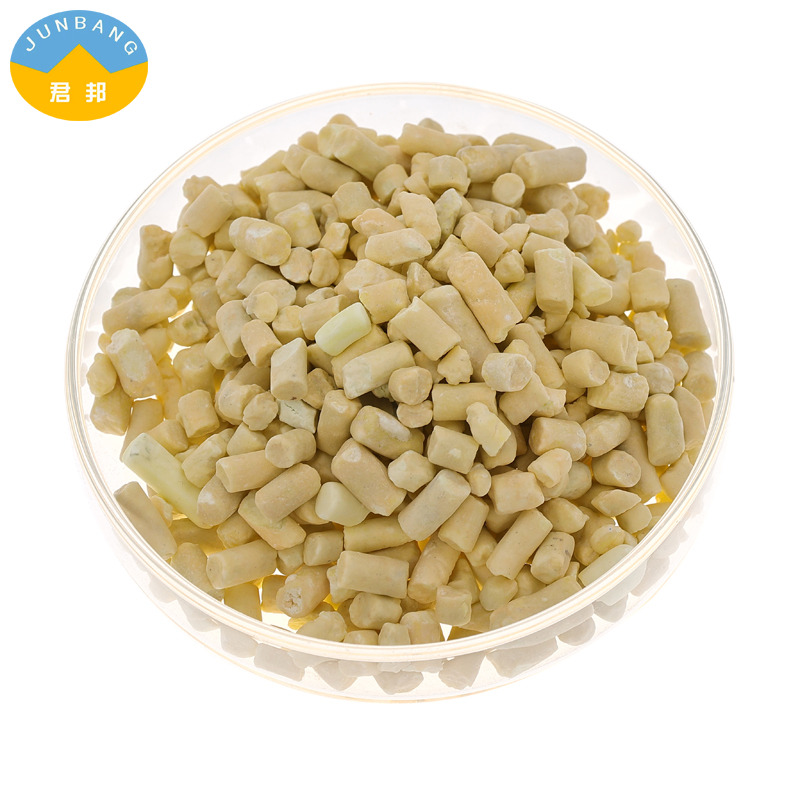
These reagents are typically stored as dry, hygroscopic pellets. Once mixed with water to form a 10% to 20% solution, the hydrolysis clock begins. The solution breaks down into carbon disulfide and alcohols, meaning liquid reagents cannot be stored long-term. This reality necessitates continuous, small-batch preparation and high-integrity metering hardware to prevent degradation before the product hits the flotation pulp.
Current industry trends show a clear move toward smarter, more responsive dosing architectures. As mining operations face more complex ore bodies, the demand for precise chemical control has shifted from simple flow management to integrated digital monitoring. Modern plants are now prioritizing modular, skid-mounted systems that allow for real-time adjustments, effectively decoupling the preparation phase from the dosing phase to minimize chemical instability.
A functional system is far more than a pump and a pipe; it is an engineered fluid handling architecture designed to move a volatile chemical from a solid state to a controlled injection point. The process follows a strict, unforgiving sequence designed to maximize chemical efficacy while shielding operators from toxic exposure.
The journey begins in the preparation phase. Dry pellets are introduced into a tank where top-mounted agitators provide the shear force needed for complete dissolution. The solution then moves to a day tank, acting as a buffer reservoir. Finally, positive displacement pumps draw this solution and force it toward the flotation cells at a constant rate, utilizing pulsation dampeners and flow meters to maintain a laminar, measurable stream.
Selecting the correct vessel is the first step in building a sustainable metering skid. Poor tank choice inevitably leads to accelerated hydrolysis, toxic gas accumulation, and structural corrosion. Since aqueous solutions typically lose their strength within 48 to 72 hours, day tanks should never be oversized. Industry standards suggest sizing tanks for a 24-hour supply to ensure the reagent remains fresh.
Material science is paramount here. HDPE is favored for day tanks due to its chemical resistance, while 316 Stainless Steel is preferred for larger preparation vessels subject to high mechanical stress. It is vital to avoid all reactive metals like copper or brass, as they form insoluble precipitates that will foul valves and destroy pumping accuracy.
Component | Recommended Material | Why? |
|---|---|---|
Day Tank | HDPE | Excellent chemical resistance, cost-effective. |
Preparation Tank | SS316 | Handles heavy mechanical agitation. |
Pump Wetted Parts | PTFE / PVC | Prevents corrosive interaction and buildup. |
The pump serves as the beating heart of the system. Standard centrifugal pumps are unsuitable because their flow rates vary with downstream pressure. Positive Displacement (PD) pumps are the only choice for accurate delivery, as they force a fixed volume of fluid regardless of line pressure.
When evaluating PD technology, two options stand out. Diaphragm metering pumps offer a sealless design, which is essential for handling toxic fluids with high volumetric accuracy. If your process handles high-grade ores, these pumps provide the necessary turndown ratio to dose minimal amounts of collector solutions. Alternatively, peristaltic hose pumps excel in setups where undissolved solids might be present, as they handle particulates without clogging.
Achieving stability requires more than just a pump; it demands a measurable delivery loop. The mining sector is currently prioritizing Industrial Internet of Things integration to monitor dosing in real-time. By utilizing SCADA-integrated magnetic flow meters, operators can modulate pump speed via Variable Frequency Drives. This ensures that the grams-per-ton ratio remains constant, even as the feed rate of the ore varies throughout the shift.
To support this, pulsation dampeners are required to convert the irregular output of PD pumps into a smooth, continuous flow. Furthermore, backpressure and pressure-relief valves act as the final line of defense, preventing siphoning and protecting the piping infrastructure from over-pressurization during blockages. This level of automation not only improves recovery but also drastically reduces the labor-intensive need for manual monitoring.
Handling carbon disulfide off-gassing requires strict adherence to safety protocols. Because this gas is heavier than air and possesses an extremely low flash point, the surrounding atmosphere is frequently classified as a hazardous zone. Every electrical motor and sensor on the skid must carry explosion-proof ratings like ATEX or Class 1 Division 1.
Beyond electronics, secondary containment is mandatory. Skids should be situated within bunds capable of holding 110% of the largest tank volume. To further improve safety, engineers should specify three-way ball valves in the piping design. These allow maintenance teams to isolate the pump and flush the line with clean water before servicing, preventing chemical burns and reducing exposure risk.
Procurement teams often fixate on initial capital costs, but the true expense of a failed pump is found in lost recovery during plant downtime. When selecting equipment for a volatile process involving xanthate collectors, prioritizing industrial-grade, corrosion-resistant components is a strategic investment. A high-quality skid built with proper 316 stainless steel components often outlasts standard equipment by a decade.
A key indicator of a reliable vendor is their ability to provide local support for critical wear parts. Rather than piecing together a system from various suppliers, procuring a pre-packaged, skid-mounted system ensures component compatibility. This approach reduces installation headaches and provides a single point of accountability if performance issues arise.
PTFE, PVC, and 316 Stainless Steel are the industry standards for wetted parts. You must never use copper or brass, as they will react chemically with the reagent, causing rapid corrosion and creating harmful byproducts that can compromise the pump.
Because these solutions undergo rapid hydrolysis, losing their effectiveness, it is recommended to size tanks for a 24 to 48-hour supply. Extended storage is generally not viable without specialized, cost-prohibitive cooling systems.
Yes. Because these variants share similar viscosities and chemical requirements when diluted to a 10-20% concentration, the same pump can handle different types, provided the flow rate remains within the pump's operational turndown ratio.
Positive displacement pumps create a stop-start flow profile. A dampener uses a pressurized bladder to absorb these shocks, protecting your piping and valves while ensuring a smooth, constant stream of reagent enters the flotation cell.
Yes. The chemical preparation process releases carbon disulfide gas, which is highly flammable and has a very low flash point. All electrical components in the immediate vicinity must be explosion-proof to prevent potential ignition sources.

