
close
Choose Your Site
Global
Social Media


Views: 0 Author: Site Editor Publish Time: 2026-10-23 Origin: Site


In the highly competitive mineral processing sector, the efficiency of froth flotation relies heavily on the empirical performance of collector reagents. At the heart of this complex physicochemical process is the intrinsic quality of the chemicals injected into the circuit. Using substandard collectors inevitably leads to poor mineral recovery, excessive reagent consumption, and unpredictable plant metallurgy. For procurement managers and metallurgists, understanding technical specifications is critical. Mastering these details optimizes operational costs and maintains consistent plant yields.
The global mining landscape is currently undergoing a massive transformation. As average ore grades decline worldwide, plants are forced to process more complex, finely disseminated minerals. This shift has made precision chemistry the primary lever for maintaining profitability. Industry trends show a definitive move away from low-cost, unverified supply chains. Instead, modern operations demand strict Environmental, Social, and Governance compliance alongside rigorous metallurgical efficiency. Consequently, the market increasingly favors suppliers who provide full traceability and validated analytical data for every single batch.
This comprehensive guide breaks down the three most vital metrics of quality control: Assay, Moisture, and Free Alkali. By learning how to correctly interpret these parameters, industrial buyers can confidently evaluate Certificates of Analysis. This knowledge ensures optimal shelf life and helps operations select the right high-performance reagents for their specific ore mineralogy.
To achieve peak metallurgical performance, plant operators must maintain strict, data-driven control over their flotation chemistry. When reagent integrity is compromised, the entire flotation circuit suffers measurable setbacks. These issues quickly ripple through the balance sheet.
Impure reagents fail to adequately coat target mineral particles. Without a robust and uniform hydrophobic layer, valuable minerals fail to attach to air bubbles. This failure leads to significant economic losses in the tailings. From a financial perspective, chemicals with low active concentrations force metallurgists to increase dosing rates just to hit baseline recovery targets. This artificial inflation of daily operational expenses destroys profit margins.
Beyond economics, poorly manufactured chemicals are fundamentally unstable. They are prone to premature decomposition, which releases hazardous carbon disulfide gas. This degradation not only destroys the product but also introduces serious respiratory and flammability risks to the workforce. Plants dealing with bad reagents often face costly mandatory ventilation upgrades.
The assay is arguably the most critical numerical value on any technical specification sheet. It acts as the definitive gauge of chemical strength and collecting potential. Essentially, the assay defines the exact mass percentage of the active molecule present in the commercial product.
During synthesis, raw materials like alcohols and carbon disulfide must react completely. Imperfect manufacturing processes often leave behind inert byproducts. Industry standards demand a high minimum assay for premium pellets and powders. For example, high-grade sodium isobutyl xanthate typically guarantees an assay of 90.0 percent or higher.
Empirical data from large-scale copper and gold operations demonstrates a clear trend. Utilizing high-assay reagents consistently translates to lower dosage requirements in grams per ton. It also produces cleaner concentrate grades. Because fewer impurities interfere with the froth phase, metallurgists gain much tighter control over their selective flotation circuits.
Moisture control is a critical pillar of manufacturing and warehouse logistics. Even a premium-grade xanthate will lose efficacy if moisture levels are not strictly managed from the factory floor to the final storage silo.
These chemicals are inherently hygroscopic. They actively pull ambient moisture from the air. When water molecules permeate the chemical structure, they catalyze a rapid hydrolysis reaction. This breakdown transforms the active collector into useless carbonates, alcohols, and toxic gas. Once this degradation begins, the decline in quality accelerates exponentially.
Top-tier manufacturers utilize advanced drying protocols to keep moisture strictly below 4.0 percent. Elite grades often test well under 2.0 percent. Experienced plant engineers know what to look for on the floor. If operators notice sticky pellets, severe clumping inside the dosing feeders, or a pungent sulfur odor upon opening a drum, hydrolysis has already occurred. This is a clear warning that the chemical integrity is compromised.
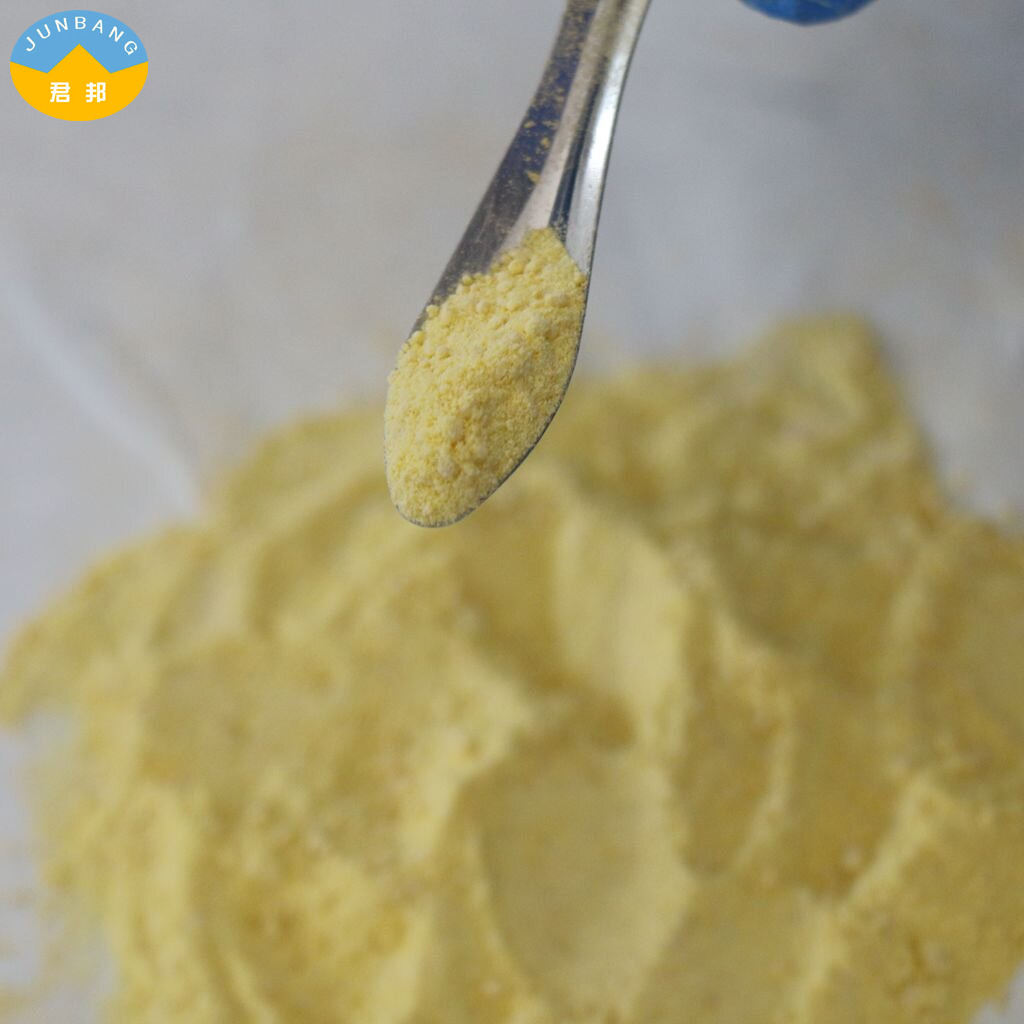
Free alkali usually appears as unreacted sodium or potassium hydroxide. It is a natural byproduct of standard synthesis. While necessary in trace amounts, its presence represents a delicate balancing act for chemical engineers.
Manufacturers intentionally leave a small alkaline residue to serve as a chemical buffer. These collector molecules are notoriously unstable in neutral or acidic conditions. The alkaline micro-environment acts as a protective shield. It prevents premature decomposition during long-distance global shipping and extended warehouse storage.
However, quality control demands strict limits. Premium specifications cap Free Alkali at 0.2 percent. When levels creep above the 1.0 percent threshold, the alkali shifts from being a stabilizer to a damaging impurity. It artificially dilutes the assay by occupying mass that should belong to the active collector. Furthermore, it alters the pH of the flotation pulp. Selective flotation relies on hyper-sensitive pH windows. Excess alkali forces operators to waste expensive acid modifiers just to neutralize the poor-quality reagent.
For procurement teams, the Certificate of Analysis is the ultimate empirical deciding factor. To verify quality like a seasoned metallurgist, you must move beyond basic pricing. You need a concrete framework for evaluating standard reagent grades versus premium formulations.
| Parameter | Reject Threshold | Premium Standard | Direct Plant Impact |
|---|---|---|---|
| Assay | Less than 85.0% | ≥ 90.0% | Determines dosing rates. High assay lowers consumption and prevents froth crowding. |
| Moisture | Greater than 4.0% | ≤ 4.0% | Prevents feeder clumping and stops rapid hydrolysis during storage. |
| Free Alkali | Greater than 1.0% | ≤ 0.2% | Maintains pulp pH stability and reduces the need for expensive pH modifiers. |
| Appearance | Dark, wet, or strong odor | Pale yellow to green-yellow dry pellets | Visual indicator of chemical degradation and safe handling conditions. |
Moving forward, the best strategy for operations is to bypass opaque intermediaries. Partner directly with manufacturers who emphasize total traceability. Modern mining demands consistent and high-purity inputs to handle the complex ores of the future. By holding your chemical suppliers to these rigorous standards, you secure a predictable and highly efficient metallurgical process.
High moisture levels trigger rapid hydrolysis. This reaction degrades the active collector into inert byproducts. Ultimately, this reduces mineral recovery and creates hazardous carbon disulfide gas inside the packaging, posing a severe flammability and health risk to plant personnel.
A low assay is usually a hallmark of deficient manufacturing. It indicates that unreacted raw materials or excessive byproducts remain in the final product. It can also stem from improper warehouse conditions where the chemical absorbed moisture and degraded before testing.
While a trace amount of free alkali buffers the product against decomposition, concentrations above one percent act as a destructive impurity. High alkali dilutes the reagent power and disrupts the natural pH of the flotation circuit. This disruption leads to increased costs for acidity regulators.
Storage must be cool, dry, and exceptionally well-ventilated. Complete isolation from direct sunlight and heat sources is mandatory. Utilizing moisture-proof sealed packaging, such as iron drums or heavy-duty plastic liners inside wooden crates, is vital to maintaining the chemical integrity of the alkyl chain.
Under optimal conditions, premium grades have a shelf life of up to twelve months. If a batch sits for more than six months, or if the original drum seal shows signs of damage, standard engineering practice dictates re-testing the assay and moisture levels before injecting it into the flotation circuit.
Impurities and unreacted alcohols from poor manufacturing act as uncontrolled frothers. This creates a brittle or overly voluminous froth phase that is difficult to manage. High-purity chemicals ensure that the froth structure remains stable, allowing for better drainage of gangue minerals and higher concentrate grades.
The difference lies in the carbon chain length. The isobutyl variant has a four-carbon chain, offering a strong balance of selectivity and collecting power, ideal for complex sulfide ores. The isoamyl variant has a five-carbon chain, making it a more aggressive, stronger collector. It is typically deployed for tarnished or harder-to-float oxidized sulfide minerals where maximum recovery is prioritized over strict selectivity.
Optimizing your flotation circuit starts with uncompromising chemical quality. Do not let substandard reagents dictate your recovery rates. Evaluate your current plant metallurgy and select the precise chemical formulation tailored to your ore body. Visit Junbang Chemical today to explore premium, high-assay solutions designed for the rigorous demands of modern mineral processing.

